Have you ever seen the word "Albumin" on your blood test report and wondered what it means? You are not alone. Many people see this term but don't really understand what it does or why it matters.
In this blog, we will explain everything about albumin in very simple words. By the end, you will understand what albumin is, why your doctor checks it, and how you can keep your albumin levels healthy. Let's start from the basics.
What Is the Function of Albumin?
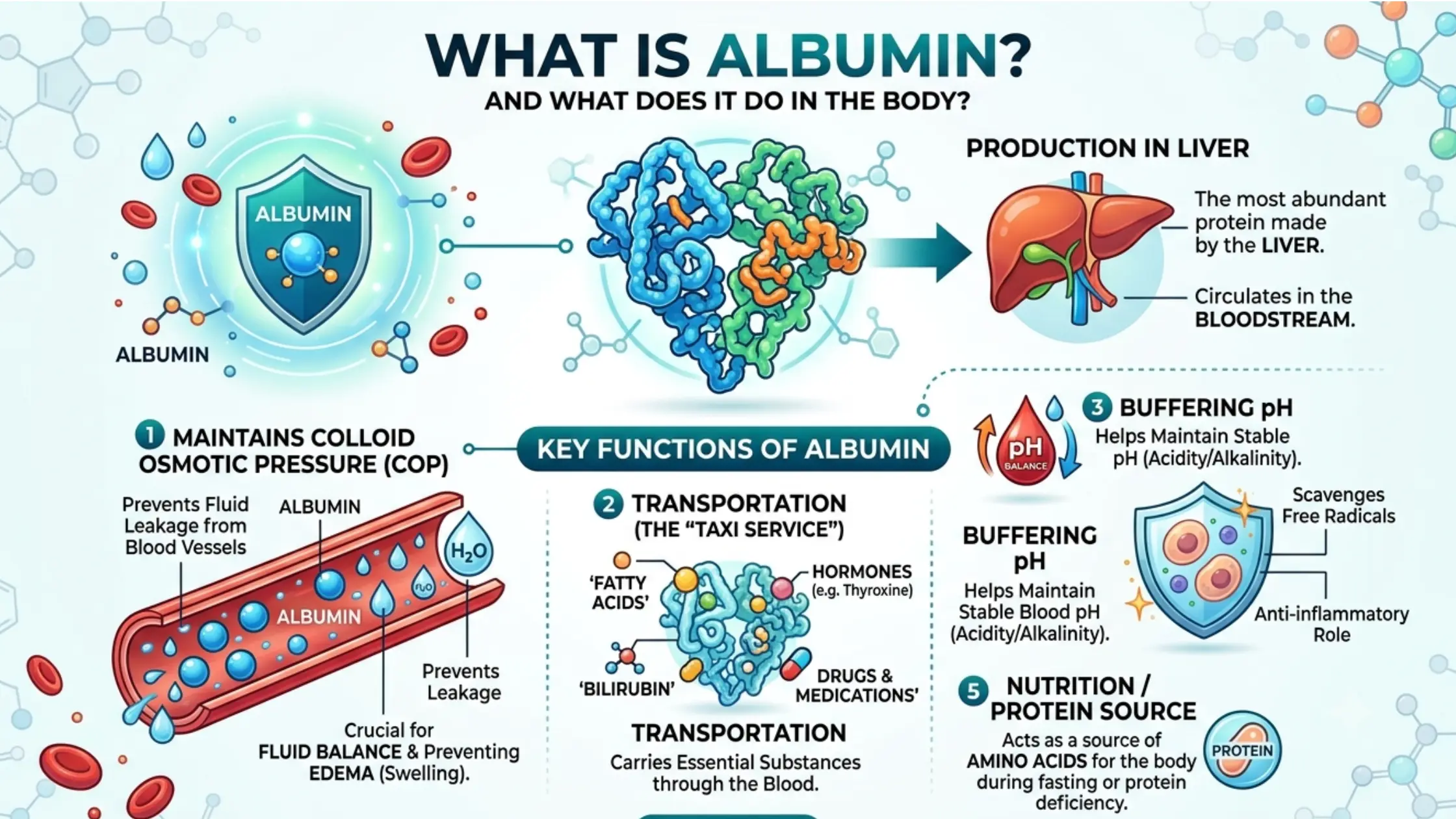
Albumin is a type of protein. Your liver makes it, and it travels through your blood. In fact, albumin is the most common protein in your blood plasma. It makes up more than half of all the protein found there.
So what is the main function of albumin? Its main job is to keep fluid inside your blood vessels instead of letting it leak out into your body tissues. Think of albumin like a sponge that holds water inside your blood. Without enough albumin, fluid can leak out and cause swelling in your legs, feet, or belly.
Albumin also works as a transport vehicle. It carries many important substances through your bloodstream, such as hormones, vitamins, calcium, and even medicines, delivering them to different parts of your body where they are needed.
What Is the Main Function of Albumin?
If we had to pick just one main job of albumin, it would be maintaining fluid balance in the body. This is also called oncotic pressure or colloid osmotic pressure.
Here is how it works in simple words:
- Albumin pulls water into your blood vessels
- This stops fluid from leaking into your tissues
- It keeps your blood volume stable
- It prevents swelling in your legs, belly, and other body parts
Along with this main job, albumin also helps transport hormones, vitamins, medicines, and other substances through your blood. So while fluid balance is its biggest role, albumin truly multitasks inside your body.
What Does Albumin Do in the Body?
Albumin does many important jobs every single day. Here are its key roles explained simply:
- Maintains fluid balance - keeps water inside blood vessels and prevents swelling
- Transports nutrients - carries vitamins, minerals, and hormones to your cells
- Carries medicines - many drugs travel through your blood attached to albumin
- Balances pH levels - helps keep your blood neither too acidic nor too alkaline
- Supports tissue growth and repair - provides building blocks for healing wounds
- Acts as a reserve protein - your body can use it as backup nutrition during illness
As you can see, albumin is not just a number on your report. It is a hardworking protein that keeps your whole body running smoothly.
What Is a Normal Albumin Level?
A normal albumin level usually falls between 3.5 to 5.0 grams per deciliter (g/dL) of blood. However, normal ranges can vary slightly depending on the lab and testing method used.
Here is a simple breakdown:
- Normal albumin level: 3.5 to 5.0 g/dL
- Low albumin (Hypoalbuminemia): Below 3.5 g/dL
- High albumin (Hyperalbuminemia): Above 5.0 g/dL, this is rare
Always check the reference range printed on your own albumin blood test report, since it may differ slightly from lab to lab. If your numbers fall outside the normal range, talk to your doctor for proper guidance.
What Organ Is Responsible for Albumin?
Your liver is the organ responsible for making albumin. The liver produces albumin continuously and releases it into your bloodstream.
This is why albumin levels are so closely connected to liver health. If your liver is damaged or not working properly, it cannot make enough albumin. This is one reason doctors often include albumin testing as part of a liver function test.
Healthy kidneys are also important here. While kidneys do not make albumin, they help prevent it from leaking out of your body through urine. So both your liver and kidneys play a role in keeping your albumin levels balanced.
Why Should I Have a Blood Test for Albumin?
An albumin blood test is a simple and important test that gives your doctor useful information about your overall health. Here is why you might need this test:
- To check how well your liver is working
- To check how well your kidneys are working
- To find the cause of unexplained swelling in your legs, feet, or belly
- To monitor your nutrition status, especially if you have lost weight unexpectedly
- To track chronic illnesses like liver disease, kidney disease, or malnutrition
- As part of a routine health checkup or pre-surgery testing
This test only needs a small blood sample and gives quick, reliable results. It is often combined with other liver and kidney tests for a complete health picture.
Is Low Albumin Better Than High Albumin?
No, neither low nor high albumin is "better." Both situations mean something is not balanced in your body, and both need attention.
Low albumin can happen because of:
- Liver disease
- Kidney disease
- Poor nutrition or low protein intake
- Infections or inflammation
- Burns or major injuries
High albumin is much less common and is usually linked to dehydration, meaning your body simply doesn't have enough water, which makes the albumin appear more concentrated in your blood.
The healthiest position is right in the middle, within the normal range. If your levels are too low or too high, your doctor will help find out the real cause and the right treatment.
Does Low Albumin Mean Liver Damage?
Low albumin can be a sign of liver damage, but it does not always mean that. There are several other reasons albumin can drop.
Possible causes of low albumin include:
- Liver disease, such as cirrhosis or hepatitis
- Kidney disease, where albumin leaks out through urine
- Malnutrition or not eating enough protein
- Chronic inflammation or long-term infections
- Digestive problems that prevent proper nutrient absorption
- Pregnancy, which can naturally lower albumin slightly
Because there are many possible reasons, your doctor will usually look at your full albumin blood test results along with other liver tests, like SGOT, SGPT, and bilirubin, before reaching any conclusion. Never assume liver damage based on a single low albumin reading alone.
What Foods Cause High Albumin?
True high albumin from food is rare. Most of the time, what people call "high albumin" is actually caused by dehydration rather than diet. However, eating a high-protein diet can naturally support healthy and slightly higher albumin levels.
Foods that naturally support good albumin levels include:
- Eggs - a complete and easily absorbed protein source
- Lean meat and chicken
- Fish, especially fatty fish like salmon
- Dairy products like milk, paneer, and yogurt
- Lentils, beans, and chickpeas (dal)
- Nuts and seeds
- Soy products like tofu
If your albumin level appears unusually high, it is more important to check your hydration and water intake rather than blaming a particular food. Always confirm with your doctor before making any major diet changes.
What Is the Fastest Way to Increase Albumin?
If your albumin level is low, the good news is that you can take steps to improve it naturally. Here are doctor-recommended ways to raise your albumin levels:
- Eat more protein-rich foods like eggs, fish, chicken, dal, and dairy
- Treat the underlying cause, such as liver or kidney disease, with proper medical care
- Stay well hydrated by drinking enough water every day
- Manage infections quickly, since inflammation lowers albumin
- Avoid alcohol, which can further damage the liver
- Take prescribed supplements only if your doctor recommends them
- Get enough rest and sleep to support your body's natural healing
In severe cases, doctors may recommend albumin infusions in a hospital setting. But for most people, fixing the root cause along with a good protein-rich diet is the safest and most effective way to bring albumin levels back to normal.
One More Thing
Albumin may be a small word on your blood test report, but it plays a big role in keeping your body healthy. From maintaining fluid balance to transporting nutrients and medicines, albumin works quietly behind the scenes every single day.
Remember these key points:
- Albumin is made by your liver and is the most common protein in your blood
- Normal albumin level is usually 3.5 to 5.0 g/dL
- Low albumin can be linked to liver disease, kidney disease, or poor nutrition
- A healthy, protein-rich diet supports good albumin levels
- Always discuss abnormal albumin blood test results with your doctor
If your recent reports show an unusual albumin level, don't panic. Talk to your doctor, eat well, and get the right tests done. Taking care of your liver and your diet is one of the best things you can do for your long-term health.