Diwali is over. But Delhi’s air has not cleared. The danger zone has just begun.
Crackers burn for one night. Their smoke stays for days. Cold winter air traps the smoke near the ground. You breathe it in with every step.
Every winter, Delhi’s air turns thick and grey. You cough more. Your eyes burn. Your chest feels heavy.
These are the health effects of air pollution. They start slowly. Most people miss them at first.
Simple medical tests can catch problems early. This blog shows how pollution harms your body. It also tells you which tests to do before winter.
Why Is Delhi’s Air Pollution Harmful to Health?
Delhi’s air carries tiny dust and smoke particles. Doctors call them PM2.5 and PM10.
PM10 is about 7 times thinner than a human hair. PM2.5 is even smaller, about 30 times thinner. You cannot see it. But your body feels it.Your nose and throat stop big dust. They cannot stop PM2.5. It slips deep into your lungs. Then it enters your blood and travels to your heart and brain.Where does this smoke come from? Vehicles, factories, construction dust, crop burning and Diwali crackers all add to it.
Look at this Diwali. The festival lasted one night. But the next morning, thick smog covered the city. The air stayed in the “very poor” zone, and several areas touched the “severe” zone. Crackers did not cause all of it. However, they fueled an already-existing fire.
Winter makes it worse. The cold air is still heavy and the wind slows. The smoke cannot rise, so it sits over the city like a lid. The AQI often crosses 300 in November. At that level, the air harms everyone, even healthy people.
The Delhi air pollution health effects on lungs build up day by day. Your airways swell. Your lungs work harder. Your heart pumps harder to send oxygen around.You may feel fine today. But the damage can grow quietly inside your body.
How Does Air Pollution Affect Your Body?
Air pollution harms the lungs first. Then it harms the heart, blood vessels, brain, eyes and skin. Here is how it happens, step by step:
- A person breathes in polluted air. Each breath carries tiny PM2.5 and PM10 particles, along with smoke gases.
- The particles pass the first shield. Nose hair and throat mucus stop big dust. They cannot stop PM2.5.
- PM2.5 reaches the deepest part of the lungs. The lungs end in millions of tiny air sacs. These sacs pass oxygen into the blood. The particles settle here.
- The lungs swell. The airways turn red and narrow. Extra mucus builds up. Cough, wheeze and breathlessness follow. This hurts respiratory health.
- PM2.5 enters the blood. The air sacs have very thin walls. The particles slip through them.
- The body fights back. It treats the particles as an enemy and sends swelling signals everywhere. Doctors call this inflammation.
- Blood vessels get damaged. The swelling makes them stiff and narrow. Blood pressure can rise. Blood can also clot more easily.
- The heart works harder. It pumps more to push blood through narrow vessels. Over the years, this raises the risk of a heart attack or stroke. This hurts cardiovascular health.
- Other parts feel it too. Eyes burn and turn dry. Skin gets itchy and dull. Headache and tiredness follow. Some studies also link long-term exposure to weak memory and focus.
Children, older adults and people with asthma or heart disease feel these effects faster.
Pollution harms the lungs and heart together. The damage often starts before any symptom shows up. That is why early checks matter.
What Are the Common Symptoms of Air Pollution?
Common symptoms include dry cough, sore throat, burning eyes, headache and tiredness. Some people also feel short of breath or wheeze.
These are early signs of air pollution related respiratory health problems. Do not ignore them.
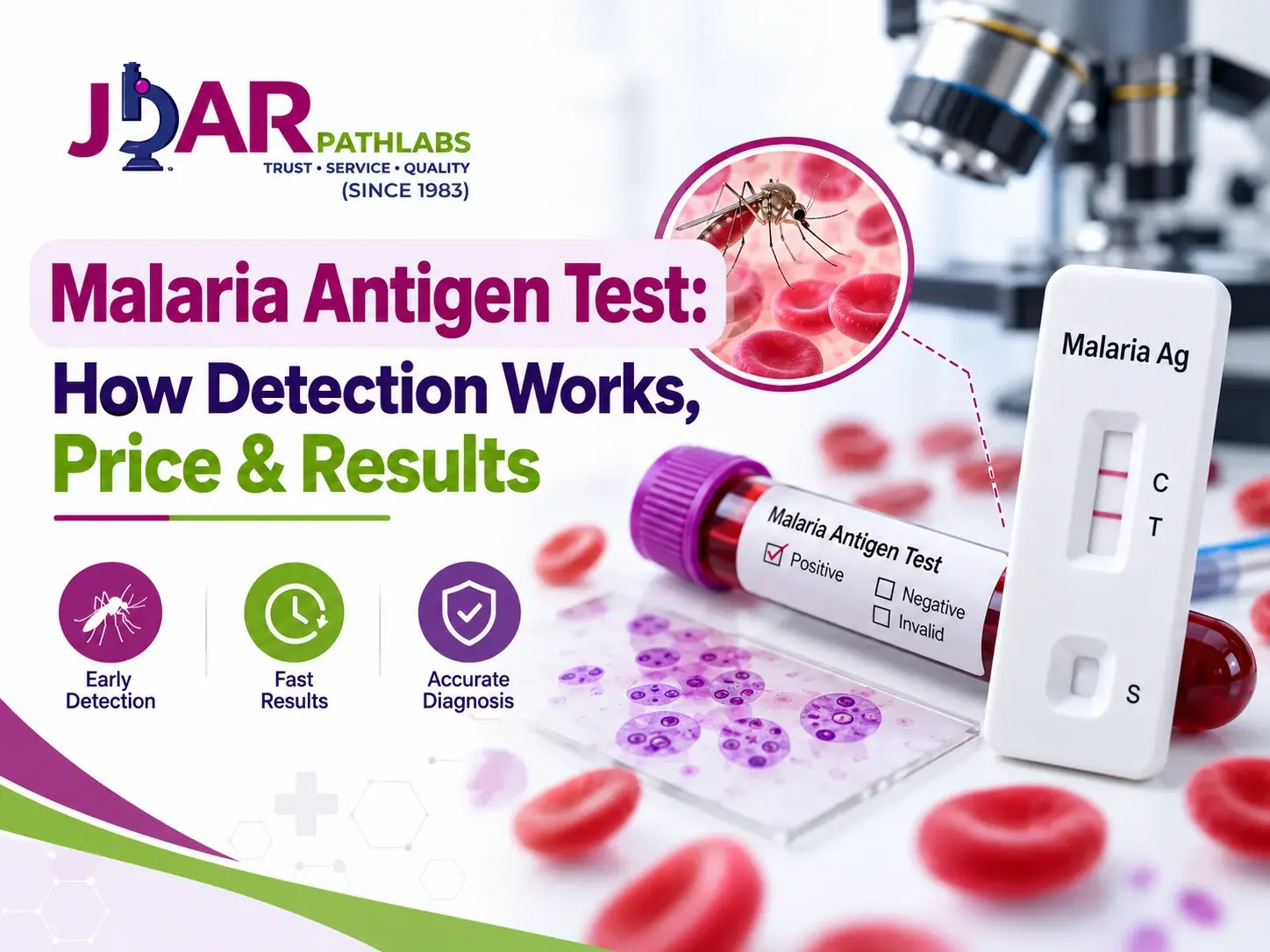
Fever, chills and body ache need extra care. Pollution does not cause these alone. Mosquitoes still breed in Delhi during October and November. A Malaria Antigen Test can quickly tell you if malaria is the cause. It needs only a small finger-prick blood sample.
How Does Poor Air Quality Affect Lung Health?
Poor air quality makes the airways swell and narrow. The lungs then work harder to move air in and out. Over the years, this can lead to asthma, bronchitis and Chronic Obstructive Pulmonary Disease (COPD).
It starts when polluted air carries PM2.5 and PM10 into the airways. The airways turn red and swollen. The lungs make extra mucus to trap the particles. The tubes get narrow and clogged. Air struggles to pass through, and cough, wheeze and breathlessness follow.
Pollution can cause three main lung problems:
- Asthma: The airways tighten suddenly. Pollution can trigger attacks and make them more frequent.
- Bronchitis: The airways stay swollen and full of mucus. A cough can last for weeks.
- COPD: This is a long-term lung disease. The air sacs and airways get damaged. Breathing stays hard, and the damage does not fully go away.
Children face more risk. Their lungs are still growing, and they breathe faster than adults. So they take in more polluted air for their size. Pollution can slow lung growth, and weak lungs in childhood can stay weak for life.
Lung damage grows slowly and quietly. Many people notice it only when breathing becomes hard. A lung function test can catch the problem early, before it becomes permanent. That is why early checks matter.
Who Is at Higher Risk During Delhi’s Pollution Season?
Children, older adults, pregnant women, people with lung or heart disease, outdoor workers, morning joggers and smokers face the highest risk during Delhi’s pollution season. Their bodies either take in more polluted air or cannot fight its damage.
- Children and newborns: Their lungs are still growing. They breathe faster than adults, so they take in more polluted air for their size.
- Adults above 60 years: The lungs and heart weaken with age. They cannot handle extra strain.
- Pregnant women: Polluted air can reduce the oxygen that reaches the baby. It can also affect the baby’s growth.
- People with asthma, COPD, diabetes or heart disease: Pollution triggers attacks and makes these conditions worse. Their bodies already fight a daily battle.
- Outdoor workers, traffic police and delivery riders: They spend long hours on the road and breathe in smoke and dust all day. Example: A delivery rider spends 10 hours on the road. After a few weeks, he coughs every morning. He thinks it is a cold, but it is an early sign of lung irritation.
- Morning joggers and walkers: They breathe deep and fast during exercise, so more PM2.5 reaches the lungs. Cold air traps the smoke near the ground, and the smog stays thick until the sun warms the city. Example: A 45-year-old man jogs at 6 am every day. He thinks it keeps him healthy. But the smog is thickest at that hour, and soon he feels a tight chest and tires quickly.
- Smokers: Their lungs already carry damage. Pollution adds more on top of it.
Which 10 Health Tests Should You Consider During Pollution Season?
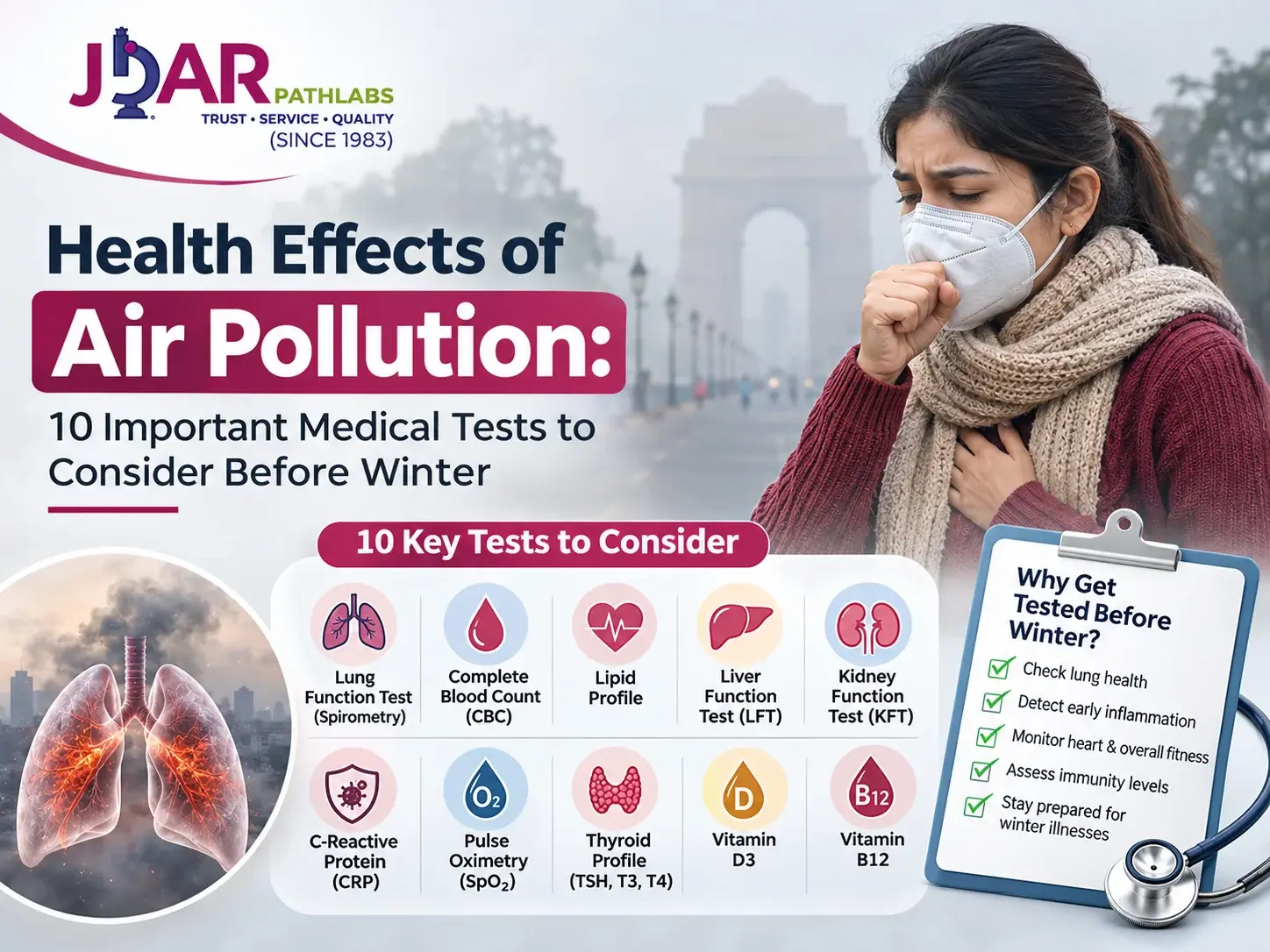
Doctors often suggest 10 tests during pollution season: CBC, CRP, Malaria Antigen Test, blood sugar, lipid profile, Vitamin D, spirometry, chest X-ray, pulse oximetry and ECG. Together, they check blood health, body swelling, lung strength and heart load. Age and symptoms decide which ones a person needs.
- CBC: Counts blood cells and shows infection or weak oxygen supply.
- CRP: Shows swelling in the body.
- Malaria Antigen Test: Finds malaria in a drop of blood when fever and chills appear.
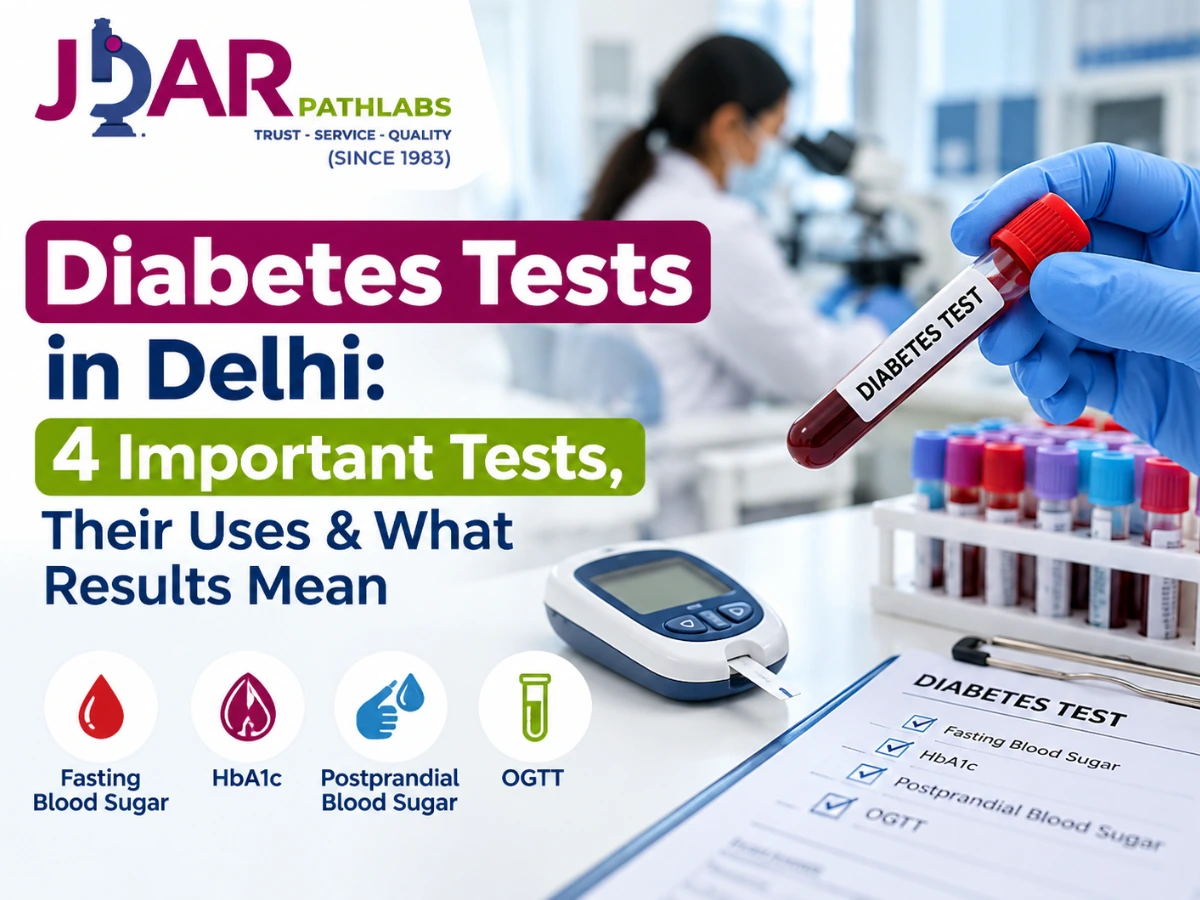
- Blood sugar test: Checks sugar level, since high sugar weakens the body’s defence.
- Lipid profile: Measures cholesterol and shows heart risk.
- Vitamin D test: Checks sunlight vitamin, which smog blocks.
- Spirometry: Measures lung strength and spots asthma and COPD early.
- Chest X-ray: Shows infection or damage inside the lungs.
- Pulse oximetry: Measures blood oxygen in seconds.
- ECG: Checks the heart’s rhythm under strain.
Book your pollution-season blood tests at JDAR Path Lab, Delhi.
Do not wait for winter to get worse. JDAR Path Lab offers CBC, CRP, Malaria Antigen Test, blood sugar, lipid profile and Vitamin D testing with fast, accurate reports. Patients have trusted JDAR since 1983, and the lab sends trained phlebotomists to homes for sample collection. The lab sits at Shanti Niketan, New Delhi, and holds NABL accreditation. It also serves as an empanelled diagnostic partner for CGHS, ECHS and Ayushman Bharat.
Book a home sample collection.
- Visit the lab: Monday to Saturday, 8 AM to 8 PM, and Sunday, 8 AM to 1 PM.
- Call +91 1124115211 to book today.
How Does a CBC Test Help Check Your Overall Health?
A CBC (Complete Blood Count) test counts the red cells, white cells and platelets in the blood. It gives a quick picture of overall health. Doctors use it to spot infection, swelling, weak oxygen supply and blood problems early.
- Red blood cells: They carry oxygen from the lungs to the body. A low count can cause tiredness, weakness and breathlessness.
- Hemoglobin: This protein inside red cells holds the oxygen. Low levels point to anemia.
- White blood cells: They fight germs. A high count can point to infection or swelling.
- Platelets: They help the blood clot. A low count can raise the risk of bleeding. This also matters in fevers like dengue and malaria.
Pollution season makes this test useful. Polluted air irritates the lungs and sparks swelling. The body then sends more white cells to fight it. Weak lungs also send less oxygen to the blood, which can lower red cell health over time. A CBC shows both changes.
The test needs only a small blood sample from the arm. It takes a few minutes, and results usually arrive the same day. Most people do not need to fast. A CBC cannot name the exact disease. But it tells the doctor which test to do next. That makes it one of the easiest medical tests for pollution-related health risks.
What Does a Spirometry Test Reveal About Lung Health?
A spirometry test shows how well the lungs work. It measures how much air a person breathes out and how fast. Doctors use it to spot asthma, COPD and other lung problems early. That makes it the best lung function test for air pollution exposure.
- FVC (Forced Vital Capacity): The total air a person blows out after a deep breath. A low value can mean the lungs cannot expand fully.
- FEV1: The air blown out in the first second. A low value points to narrow or blocked airways.
- FEV1/FVC ratio: It compares the two numbers. A low ratio is a key sign of asthma or COPD.
- After an inhaler puff: The doctor repeats the test. If the numbers improve, it points to asthma. If they stay low, it points to COPD.
The test works like this. The patient sits down and takes a deep breath. Then they blow out as hard and as fast as possible into a small machine. The patient repeats this 3 times, so the doctor gets a reliable result.
Spirometry matters in pollution season because lung damage grows quietly. Many people feel normal until half of the lung strength is gone. This test catches the loss early.
The test is painless and takes about 15 minutes. Doctors recommend it for a cough that lasts for weeks, wheezing, a tight chest or breathlessness on simple tasks. People who smoke or jog outdoors in smog should also consider it.
When Do Doctors Recommend a CRP Blood Test?
Doctors recommend a CRP (C-Reactive Protein) test when they suspect swelling or infection in the body. The liver makes CRP when swelling starts. A high level tells the doctor that something needs a closer look.
Doctors often suggest it in these situations:
- Long cough: It helps check for lung infection or swelling.
- Fever: It shows how strong the body’s reaction is.
- Chest pain or breathlessness: It helps the doctor look for swelling in the lungs or heart.
- Body pain or joint pain: It can point to swelling in the body.
- Heart risk check: A special version, called hs-CRP, helps track the risk of heart disease.
CRP works like a fire alarm. It rings when the body fights something. But it does not say where the fire is. The precise issue is not identified by a high CRP. So the doctor reads it along with symptoms and other tests like CBC and spirometry.
The test matters in pollution season. Polluted air swells the airways and can raise swelling across the body. A CRP test shows how strong that swelling is. Doctors also repeat it later to see if the treatment works. A falling level is a good sign.
The test needs only a small blood sample from the arm. Results usually come within a day.
How to Choose a Reliable Diagnostic Lab in Delhi?
A reliable diagnostic lab holds NABL accreditation, uses trained staff and delivers accurate reports on time. NABL means an independent body has checked the lab’s quality rules. Patients should check these points before booking:
- NABL accreditation: Confirms the lab follows national quality standards.
- Trained staff: Qualified pathologists and trained technicians handle the samples.
- Clear pricing: The lab shares test rates before sample collection.
- Quick reports: Fast results help the doctor start treatment sooner.
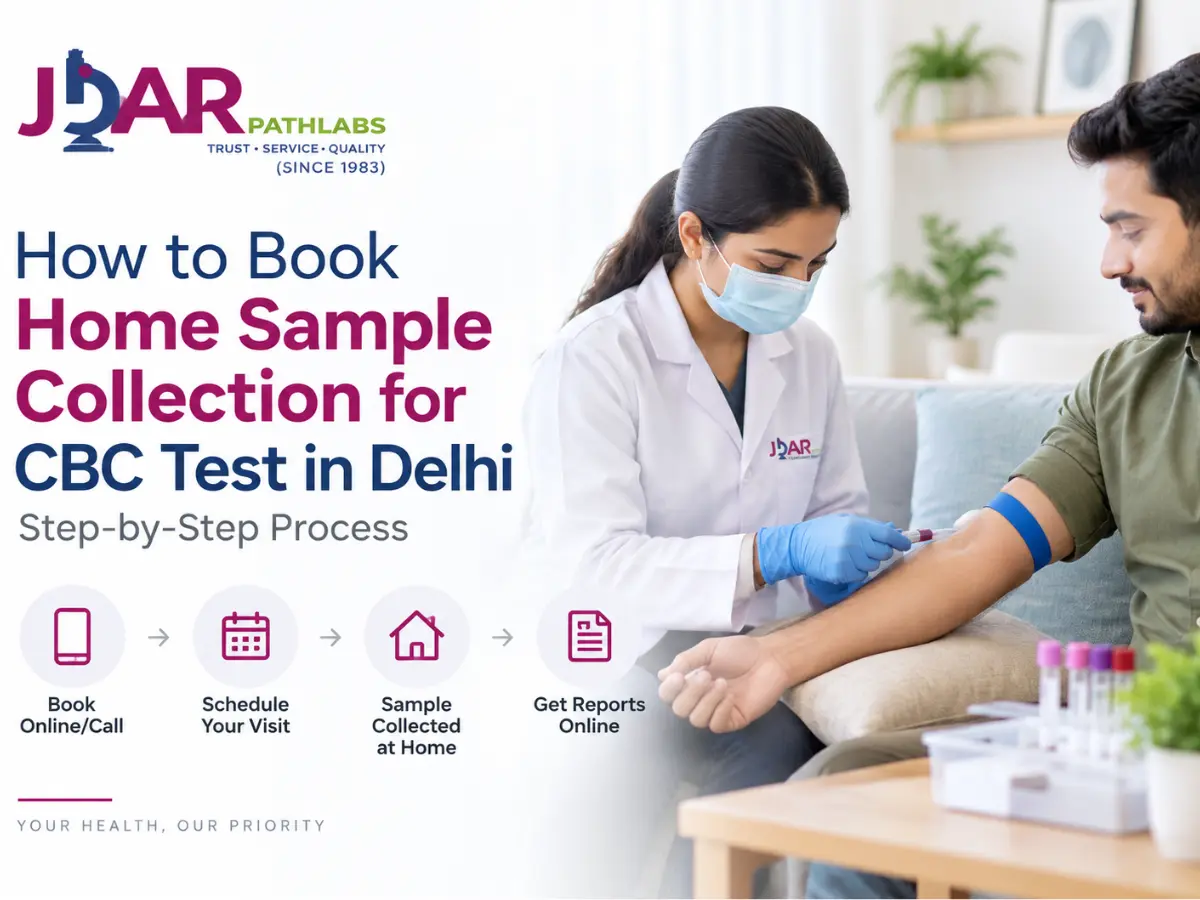
- Home sample collection: A trained phlebotomist visits the home. This helps older adults, children and people with breathing trouble, especially on smoggy days.
- Clean collection area: A clean space lowers the risk of infection.
- Proof of trust: Long experience, patient reviews and approval from hospitals and government bodies show steady quality.
JDAR Path Lab in Shanti Niketan, New Delhi, is one example of a lab that meets these points.
- Experience: JDAR has served patients since 1983, and more than 10 lakh patients have trusted it with their health.
- Expertise: The lab offers multi-disciplinary pathology services, including biochemistry, immunology, clinical pathology, cytology, FNAC, microbiology and hematology.
- Authoritativeness: The lab holds NABL accreditation. It works as an empanelled partner for CGHS, Ayushman Bharat, ECHS, Safdarjung Hospital, RML Hospital, NDMC and the Delhi High
- Trust: Patients have left reviews on Google. The lab sends trained phlebotomists to homes and says it is known across South Delhi for short report turnaround times.
Final Thoughts
Book your pollution-season health tests at JDAR Path Lab, Delhi.
JDAR Path Lab offers CBC, CRP, Malaria Antigen Test and more, with fast and accurate reports. Trained phlebotomists visit homes for sample collection.
- Book a home sample collection
- Upload a prescription
- Call +91 1124115211 to book today